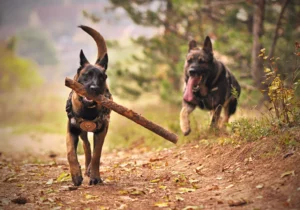
Best Training Collar for Stubborn Dogs: Complete Guide In 2026
Introduction
Training a stubborn dog is very important for every pet owner, but it can be difficult at some times. Some dogs are very intelligent and obedient. But some breeds have a strong personality and strong self-belief. It takes time to train that type of dog. People say these are stubborn dogs. But in many cases, the issue is due to no proper training, no exercise, and no consistency. If you train your dog with proper planning and with the right strong training collar strong , then this dog can become your best friend and also your honest protector. In the modern era, there are many types of training collars. But every collar is not suitable for every dog. So make sure to check the dog’s health, his strong body, and his attitude. After that, you will choose a training collar. In today’s article, you will read about the strong best training collar for stubborn dogs strong, its benefits, and how you can use the training collar. Read in detail, and after that, you can easily choose the best training collar for your pet.Click on related article
Table of Contents
How to Identify a Stubborn Dog
If your dog does not obey your command two times, that does not mean he is stubborn. Sometimes the dog is in fear, anxiety Overexcitement .Sometimes there is noise in the environment, or you did not give proper training. So he does not obey your commands immediately.
Signs of a Stubborn Dog
In real life, there are some clear signs of stubborn dogs. For example:
1. Not coming to you even if you are calling him repeatedly
2 Leash pulling during walk
Ignoring basic commands like sit, stand, stay, etc Running towards other animals or people Adapting an attitude of his own Some strong breeds like strong German Shepherd, Belgian Malinois, Siberian Husky, Rottweiler strong dogs show this behavior more. These breeds want training that matches their free spirited nature.
For this type of dog, do not scold him or punish him. But do use patience, consistency, and proper training tools. This is very important for training a stubborn dog.
What Is a Dog Training Collar?
A training collar is a type of tool that gets a dog’s attention, reduces his bad habits, and helps him learn basic commands. The meaning of a training collar is not to give pain to the dog. It is to help the dog learn the difference between good and bad habits. If a dog ignores your commands repeatedly, pulls the leash during a walk, and runs to dangerous places, then a training collar gives proper and good control to the owner. Keep one thing in mind: only wearing a training collar will not teach the dog everything. And a training collar alone will not make the dog obedient. The real success is when you give treats for his positive work and also give proper and consistent training. If you use a training collar in the wrong way, it can create fear in the dog. That is why use it with care.
How to Choose the Right Training Collar
When buying a collar, you should not only see its price or its structure. First of all, see your dog’s age, weight, neck size, his breed, and his attitude. It is not important that a training collar is only for strong and big dogs. It is also suitable for small and sensitive dogs. The material should be soft and strong. Even if used in daily routine, it should not damage the dog’s skin. Size adjustment is necessary. Make sure that size adjustment is available or not. Also make sure that the buckle or lock is strong, so that during a walk the collar does not open. If your dog wants to play in the rain, then buy a waterproof training collar. For night walks, reflective leash or LED light collar gives more benefits. Choosing the right collar not only makes training easy.
Types of Training Collars
Flat Collar
Flat collar is very common and used all over the world. Mostly made from nylon cloth and leather. It is very good for daily use. If your dog is already learning basic commands or obedience, then a flat collar is very useful for it. In this collar you can easily attach the contact number, name, or identity tag. This helps if your dog is lost. However, this collar will not control a stubborn dog or strong dog easily. But for start training, home use, or daily walk, this is a better option. It is protective and comfortable. If you choose the right size, then this collar will not give extra pressure to the dog’s neck.
Martingale Collar
Martingale collar is designed for that type of dog that tries to break free from the collar and run away. The special benefit of this collar is that when a dog tries to pull the leash, it fits on the neck. But it is not tight enough that the dog is unable to breathe. Many professionals and dog trainers say that this is very good for stubborn or strong dogs and long neck breeds like hounds, whippets. Apart from that, for German Shepherd, Husky, or other dog breeds, this training collar plays a key role in training. Many owners use it the right way, so it gives good control and comfort to the dog.
Head Collar
A strong head collar strong is different from other collars because it does not fit on the dog’s neck. Instead, it also fits on the nose and head. The main purpose of a head collar is to control the direction of the dog’s head. This also helps to control the whole body easily. If your dog is pulling the leash during a walk and runs towards other pets or humans, then the head collar is very useful for this type of dog. In the start, some dogs do not want to wear this collar. That is why you should give training slowly, slowly so that he adopts the collar. Give treats and a positive response.
With this method, dogs accept this collar in very few days. If you use it in the right way, it will give positive results to owners.
Front Clip Harness
Although a front clip harness is not a traditional collar, it is very useful when you give training to a stubborn dog. This harness is safe and protected as compared to other collars. In this harness, the leash is placed in front of the chest. This prevents the dog from pulling. When the dog is trying to pull, his body automatically moves toward the owner. So the dog understands his mistake and he slowly avoids this pulling habit. This training tool is very useful for dogs whose neck is sensitive or who have difficulty in breathing. Breeds like German Shepherd, Golden Retriever and other strong breeds benefit a lot from it. This harness is very famous and mostly used by trainers. If you give training without giving punishment or strictness, then this collar is very useful for you.
Vibration Training Collar
In today’s modern era, a vibration collar is considered a modern collar. In this collar there is no electric shock, only light vibration The purpose of vibration is to get the dog’s attention when the dog is doing something wrong or ignoring your command. The owner presses the remote button and the collar gives a vibration. With consistent vibration training, the dog learns to follow commands without extra pressure. This is why many professional trainers prefer it. When used correctly, this collar is safe for every dog, even for sensitive dogs.Click on related article
Beep Training Collar
A strong beep or sound collar strong is very useful for dogs who quickly focus on voice or sound. This collar makes a beep sound that is mostly combined with training. For example, if you say “come” every time in training and use the beep with the “come” command, then after some time the dog will come when he hears only the beep sound. This is mainly used for the initial stage of training or to get a dog’s attention from a distance. Many owners like this collar because there is no punishment in it, so it is very safe.
GPS Training Collar
A strong GPS collar strong is used for both dog training and dog protection. It is very useful if your dog goes far from home, in open places, or if you have a hunting breed. With a GPS collar you can find your dog’s location directly from your mobile. In some modern GPS collars you can also check walk history and set a geo fence. Geo Fence means area which you selected for your dog called GEO FENCE. If your dog goes out of the area you selected, you get an alert immediately. This collar is very useful for stubborn dogs and dogs that like to run.
Remote Training Collar
A strong remote training collar is very useful for owners and trainers who train dogs in open places or fields. Modern remote collars mostly come with beep and vibration features. Some advanced models have improved features. Professional trainers mostly recommend beep and vibration collars. It is best to use this collar with a positive attitude to get the dog’s attention. This collar should only be used by a professional trainer or experienced owner, because if used incorrectly, training can be affected.
Which Training Collar Is Best
The answer to this question is not the same for every dog because every dog has different needs. If your dog is pulling the leash only during walking, then a strong front clip harness and strong head collar are best. If your dog is trying to slip out of the collar, then a strong Martingale collar is safe. For starting basic training, a strong flat collar is best. If you want to get your dog’s attention, then a strong vibration collar or strong beep collar is best. If your dog is running away from home, then a strong GPS collar is the best choice. When choosing a collar, always consider your dog’s age, breed, and training importance. Do not choose only based on a good brand and price.
Features to Look For When Buying a Training Collar
When buying a standardor normal collar, look for a strong buckle, soft material, waterproof design, and adjustable size. If the collar is electronic, check for important features like long battery life, beep sound, normal vibration levels, and easy control. A good remote range is also important for training in open areas. Always choose the weight of the collar according to your dog’s weight and body size. The collar should be easy and comfortable for your dog to wear. Before buying a collar, check the reviews about the collar and also check the collar brand for quality and safety. A good and best quality collar is used for years. That’s why do not focus only on low price, but focus on the brand and quality of the collar. if you buy a training collar so please check the size of neck of your dog
Training Collar Is Not Enough Alone
If you buy an expensive or strong training collar, it is not beneficial for you if you do not use it the right way. Every time when your dog does positive work, give treats, positive response, praise him, or give toys. This will help your dog to repeat this process and positive work again. Keep training sessions short but consistent. Add exercise, love, and a positive attitude. This helps your dog to understand training easily. Remember, not only the training collar, but patience and consistency make training successful. These are what make the whole training easy and effective.
How To Use Training Collar Correctly
Buying the best training collar is not enough. You must use it the right way. First of all, let your dog wear the collar for a few days so he thinks of it as a normal thing. This way, your dog will not feel fear from the collar. After that, do short 10 to 15 minute training sessions. Teach basic commands like sit, stand, stay, etc. If you use a beep or vibration collar, first give the command. Wait for a few minutes. Then, if needed, give a light vibration or beep to get your dog’s attention. When your dog reacts or does positive work, immediately give treats, toys, or praise. This is the key method. Your dog will understand that when I do positive work, I will get praise or treats.
Safety Tips
Buy a collar according to your dog’s neck size. If the collar is too hard, it can put pressure on your dog’s skin and cause pain. On the other hand, a very soft collar is also not beneficial. Professional trainers say there should be a 2-finger gap between the collar and the neck. This gap helps your dog breathe easily and move his neck comfortably. Do not make your dog wear the collar all day. Use it only during training or walk time. Check your dog’s neck daily. If you see redness, irritation, or other problems, stop using the collar. If your dog is sick or very young, talk to a professional trainer or vet before using a training collar.
Common Training Mistakes to Avoid
common training mistake is that Many owners make mistakes during training that affect dog training results. Here are the most common mistakes Do not use a training collar when you are angry, or not use it as a punishment. Do not do very long training sessions. Do not teach many different commands on the same day. Do not forget to give treats, praise, or rewards for positive workk. Do not let different people use different commands. Also, do not skip training days. Some people do not use the right size collar for their dog. Remember, a training collar is just a tool. It helps with control and training, but the main thing is consistency in your training. Avoid these mistake
When To Hire Professional Dog Trainer
If you train your dog consistently for several weeks but he still does not obey commands, attacks people or other animals, or shows extreme fear and running away, it is time to call a professional dog trainer. Some dogs have fear due to past experiences, sickness, or physical weakness. In these cases, only a professional dog trainer can find the real problem and help fix it. A professional trainer has the right experience and tools to handle serious behavior issues safely. this is not important to hire a professional trainer you give training by itself by watching youtube videos
Conclusion
Training a stubborn dog is a process that needs patience, time, and consistency. if you give training to your dog keep one thing in mind consistency is a key to success. The best training collar is the one you choose according to your dog’s age, body size, and attitude. Options include a flat collar, martingale collar, front clip collar, vibration collar, GPS collar, or remote training collar. Using these different collars in the right way, or choosing the correct collar, can make a big change in stubborn dog behavior. Keep in mind, a collar is just a tool that makes training easy. The real key is patience, consistency, and love. These help your dog learn training quickly.
OTHER ARTICLES
https://biopawguide.xyz/stubborn-dog-training-challenges/
https://biopawguide.xyz/how-to-train-a-belgian-malinois-dog
https://biopawguide.xyz/dog-training-for-blue-heelers/
FAQS
WHICH TRAINING COLLAR IS BEST TRAINING COLLAR FOR STUBBORN DOGS
THIS IS CHOOSE ACCORDING TO DOG BEHAVIOR IF DOG PULL LEASH ONLY DURING WALKING THEN FRONT CLIP HARNESS OR HEAD COLLAR IS BEST OPTION IF DOG TRYING TO LEAVE THE COLLAR SO MARTANGLE COLLAR
CAN TRAINING COLLAR HARM THE DOG
IF YOU BUY A WRONG SIZE OF COLLAR AND WEAR A TRAINING COLLAR TO DOG FOR MANY HOURS SO MAY BE PAIN IS POSSIBLE IN SKIN THERFORE CHOSSING A TRAINING COLLAR IN RIGHT SIZE